
Choosing windows for a Toronto home often feels like a compromise. Standard options can struggle against the city’s punishing climate, leading to drafts, condensation, and rising energy bills. However, a different approach exists—one that treats a window not as a simple opening, but as a high-performance component of your home’s building envelope.
This is the philosophy behind European tilt and turn windows. Moving beyond the surface-level discussion of cost and style, this is about understanding a fundamental shift in engineering. For homeowners seeking long-term value, comfort, and durability, exploring the right window solutions in Toronto means looking at a system designed to conquer environmental challenges, not just endure them.
The European Window Advantage in 4 Key Areas
- Climate Resilience: Engineered to defeat Toronto’s humidity, cold, and freeze-thaw cycles where standard windows fail.
- Financial ROI: A long-term asset that reduces energy bills and boosts property value, offsetting the initial cost.
- Urban Livability: Drastically improves city life through superior sound insulation, secure ventilation, and enhanced security.
- Future-Proof Design: Exceeds current energy codes, ensuring your home remains efficient and valuable for decades.
Conquering Toronto’s Four-Season Climate Gauntlet
Toronto’s climate is a formidable adversary for any building component. The humid summers and cold, damp winters create a cycle of expansion and contraction that weaker windows cannot handle. European tilt and turn models are engineered specifically for this kind of stress, starting with their sealing technology.
Unlike standard North American slider or double-hung windows that rely on simple weatherstripping, these units use a superior compression seal. When closed, the sash presses firmly against a continuous gasket, creating an airtight barrier that prevents the air leakage and condensation that plague lesser designs.
Toronto Homes Report Significant Heating Cost Reduction
Homeowners in Toronto report annual heating cost reductions of 25-35% after upgrading to European tilt-turn windows, translating to $400−$700 in yearly savings for a typical 2,000 sq ft home.
This robust design proves its worth against wind-driven rain and lake-effect snow. A multi-point locking system engages around the entire frame, applying uniform pressure. This forms an impenetrable barrier to drafts and moisture infiltration, effectively preventing the water damage and interior ice buildup common during harsh winters.
The city’s notorious freeze-thaw cycles are another critical test. Toronto experiences around 90 annual freeze-thaw cycles, which can warp and degrade standard window frames over time. The robust hardware and high-quality materials in European designs, such as reinforced uPVC or thermally broken aluminum, resist this mechanical stress, ensuring consistent, smooth operation year after year.

This close-up view demonstrates the core principle of the compression seal. On the exterior, frost may form, but the multi-layered gasket system creates a thermal break, keeping the interior surface warm and completely free of condensation, protecting your walls and air quality.
Beyond the Price Tag: Calculating the True Return on Your Investment in the GTA
The initial investment for high-performance windows is higher, a fact that often dominates the conversation. However, framing this as a simple expense is a mistake. European windows are a long-term asset, and their true value becomes clear when you calculate the return on investment (ROI) within the Greater Toronto Area’s specific economic context.
Exceptional thermal performance, measured by a low U-value, translates directly into measurable savings. With Ontario’s fluctuating hydro and natural gas rates, reducing heat loss in the winter and heat gain in the summer has a significant impact on monthly bills. While Toronto window replacement costs range from $400–$2000 per window depending on quality, the energy savings from a superior product begin compounding immediately.
Consider the lifespan. Builder-grade windows often require replacement within 15-20 years. In contrast, well-made European windows are designed for a 30-40+ year lifespan. This isn’t just a minor upgrade; it means you avoid the cost and disruption of a second full replacement, a major financial benefit over the life of your home. As one homeowner noted in a discussion about long-term value, it’s crucial to balance initial cost with decades of energy savings and improved comfort.
| Investment Factor | Short-term (1-5 years) | Long-term (20+ years) |
|---|---|---|
| Energy Savings | $2,000−$3,500 | $8,000−$14,000 |
| Property Value Increase | 3-5% immediate | Maintained premium |
| Maintenance Avoided | $500−$1,000 | $5,000−$10,000 |
| ROI at Resale | 68-78% | Full recovery+ |
In the competitive Toronto real estate market, high-performance windows are also a powerful differentiator. They boost curb appeal and signal to potential buyers that the home has been maintained and upgraded with quality components.
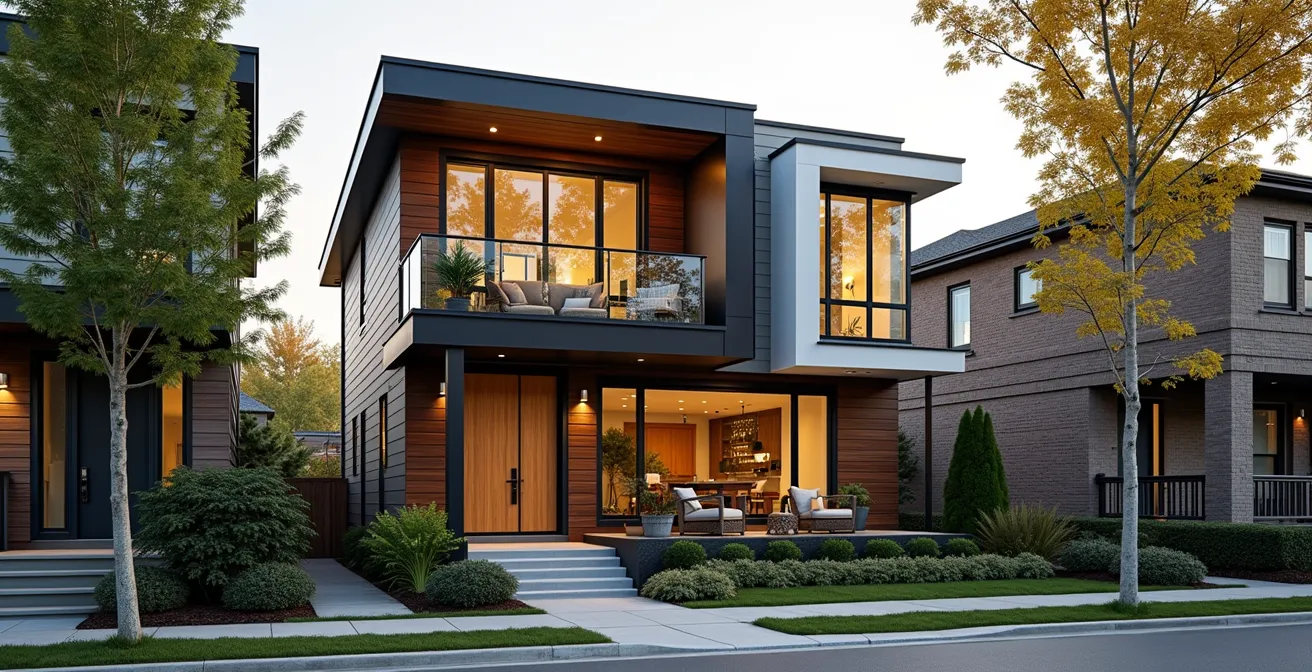
This enhanced comfort and tangible energy efficiency can contribute to a higher final sale price, allowing homeowners to recoup a significant portion, if not all, of their initial investment.
Enhancing Urban Living: From Acoustic Serenity to Practical Security
Life in Toronto comes with a unique soundscape—the rumble of a TTC streetcar, the constant hum of the Gardiner Expressway, or the noise of nearby construction. European windows offer more than generic “soundproofing”; their combination of multi-pane glazing and a truly airtight seal creates a quiet sanctuary. A high-quality installation can deliver a noise reduction of up to 45dB, enough to turn urban clamor into a faint background murmur.
The dual-function mechanism offers unique lifestyle benefits for city dwellers. The ’tilt’ function is a game-changer, allowing for secure, draft-free ventilation. You can air out your home even during a rain shower without worrying about water getting in or compromising security—a perfect feature for townhomes and condos.
What is the main benefit of the ’tilt’ function?
The tilt function allows for secure, all-weather ventilation. It lets stale air out and fresh air in without creating drafts or requiring the window to be wide open, enhancing both safety and comfort.
When it’s time to clean, the ‘turn’ function allows the entire sash to swing inward like a door. This makes cleaning the exterior glass from inside your home safe and effortless, eliminating the need for ladders or risky maneuvers on upper floors.
Finally, these windows provide a profound upgrade in security. The multi-point locking mechanism engages steel bolts or pins on all sides of the frame. This creates far more resistance to forced entry than the simple, single-point latches found on most North American windows, offering crucial peace of mind in an urban environment.
Security Features to Look For
- A multi-point locking system that engages on all four sides of the window frame.
- Reinforced steel security points integrated throughout the frame structure.
- 3D adjustable hardware that ensures proper alignment and a tight seal.
- Compression seal technology that resists prying and forced entry attempts.
- Hidden hinges that are protected from external tampering when the window is closed.
Key Takeaways
- European windows use a compression seal and multi-point locking for superior climate resistance.
- The long-term ROI comes from major energy savings and a 30-40+ year lifespan.
- The tilt-and-turn function offers secure ventilation and easy cleaning, ideal for urban homes.
- Advanced engineering and customization options allow them to fit any Toronto architectural style.
Marrying European Engineering with Toronto’s Architectural Diversity
The “European” label isn’t just about geography; it represents a distinct engineering philosophy. This approach is rooted in stricter energy codes, a focus on extreme longevity, and precision manufacturing. The result is a fundamentally more robust and sophisticated product that redefines what a window can do for a home.
Exceeding Standards for a Future-Proof Home
Even basic European tilt-and-turn windows can reach U-factors around 0.23, while advanced passive models go as low as 0.13. This performance significantly exceeds current Ontario Building Code requirements, future-proofing homes against inevitably stricter energy standards to come.
This high level of engineering does not come at the expense of aesthetics. These windows offer incredible versatility to match Toronto’s diverse housing stock. You can specify sleek, minimalist aluminum frames for a modern condo in Liberty Village, or choose classic wood and wood-clad finishes to complement a historic Victorian home in Cabbagetown. Understanding the general process of choosing windows helps in appreciating these advanced customization options.
By investing in windows that already surpass future energy targets, you are not only saving money now but also ensuring your home remains compliant, comfortable, and valuable for decades. This forward-thinking choice requires precise installation to realize its full potential. Always find a professional builder or certified installer to ensure your high-performance windows are fitted to the manufacturer’s exact specifications.
Frequently Asked Questions on European Windows
How do European windows differ from North American standards?
European windows use multi-point locking systems, superior compression seals, and are built to stricter energy codes. The engineering philosophy prioritizes longevity and precision manufacturing for higher performance in thermal and acoustic insulation.
Can European windows fit Toronto’s varied architectural styles?
Yes, these windows offer extensive customization. Options range from sleek aluminum frames for modern condos to wood-clad finishes for Victorian homes, with a wide array of custom colors and hardware available to match any design aesthetic.
Are tilt and turn windows more expensive upfront?
Yes, they typically have a higher initial cost due to their complex hardware, superior materials, and precision engineering. However, this cost is often offset over the long term by significant energy savings, a much longer lifespan, and increased property value.